Fractional CISO for Automotive
Cybersecurity leadership for vehicle manufacturers navigating UN R155, software-defined vehicles, and connected car security
Cybersecurity Leadership for the Software-Defined Vehicle
The automotive industry is undergoing its most profound transformation since the invention of the assembly line. Modern vehicles contain over 100 million lines of code, dozens of connected systems, and constant communication with the cloud. A car is no longer just a mechanical device - it is a computer network on wheels.
This transformation brings unprecedented cybersecurity challenges. The UN R155 regulation now mandates cybersecurity management systems for all new vehicles sold in 54 countries including the EU, UK, Japan, and South Korea. UN R156 requires software update management. Non-compliance means vehicles cannot be sold.
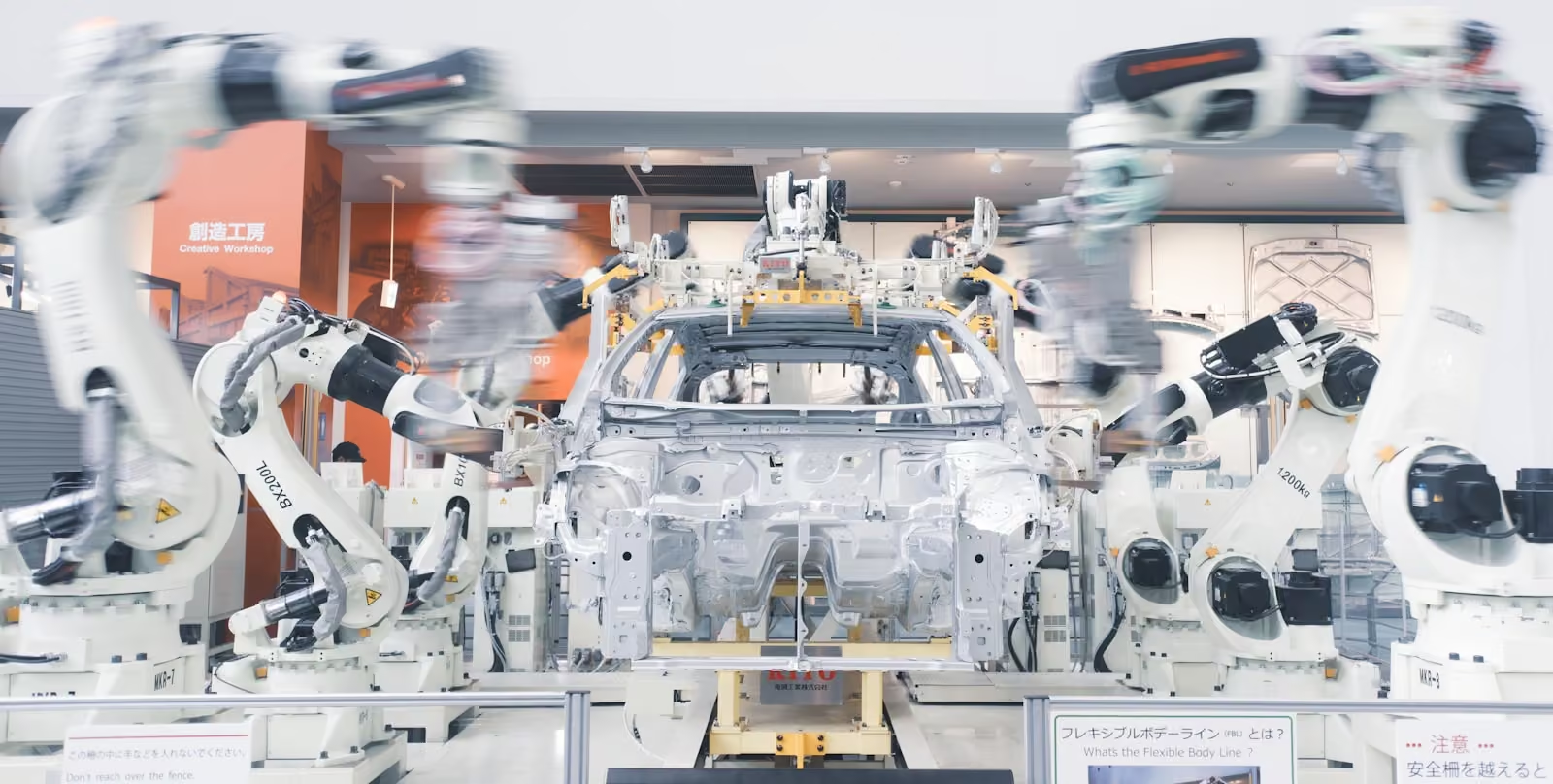
The stakes could not be higher. A cyberattack on a vehicle can affect safety systems, putting lives at risk. Attacks on manufacturing plants can halt production lines costing millions per day. The supply chain is vast and vulnerable, with thousands of Tier 1, 2, and 3 suppliers all potential entry points.
Our fractional CISOs bring automotive cybersecurity expertise to manufacturers navigating this new landscape. We help you build CSMS compliant with UN R155, secure your connected vehicles, protect your manufacturing operations, and manage supply chain risk.
UN R155 & R156 Compliance
Build Cyber Security Management Systems (CSMS) and Software Update Management Systems (SUMS) that meet UNECE regulatory requirements for type approval.
Connected Vehicle Security
Secure OTA updates, telematics systems, infotainment platforms, and vehicle -to-everything (V2X) communications against sophisticated attacks.
When Automotive Security Fails
Real-world cases demonstrating the critical importance of vehicle cybersecurity
Jeep Cherokee (2015)
1.4M vehicles recalled, remote exploit proven
Security researchers remotely hacked a Jeep Cherokee via its infotainment system, gaining control of steering, brakes, and transmission. A CISO would have implemented network segmentation, ECU isolation, and intrusion detection to prevent such remote attacks.
Tesla Model S (2016)
Keyless entry system compromised
Researchers demonstrated a relay attack that fooled the keyless entry system. A CISO would establish secure key fob protocols, implement rolling code authentication, and ensure regular security testing of all wireless systems.
Honda Global (2021)
Production halted at multiple plants
Ransomware attack on Honda's global operations disrupted manufacturing for days. A CISO would implement network segmentation between IT and OT, robust backup strategies, and incident response plans specifically for manufacturing environments.
Kia (2023)
Remote vehicle controls compromised
Security researchers demonstrated ability to remotely control vehicle functions including locks, engine, and horn through API vulnerabilities. A CISO would implement API security testing, rate limiting, and robust authentication for connected services.
BMW Connected (2018)
API vulnerabilities exposed vehicle data
Flaws in BMW's Connected Drive API allowed unauthorised access to vehicle telematics. A CISO would implement API security testing, proper authentication, and continuous monitoring of connected services.
Nissan Leaf (2016)
Climate controls remotely accessible
API vulnerabilities allowed anyone to remotely access climate controls and battery status. A CISO would enforce rigorous API security standards, rate limiting, and authentication for all connected vehicle endpoints.
Critical Risks Facing Automotive Manufacturers
The unique cybersecurity challenges of the software-defined vehicle era
Safety-Critical Systems
Cyberattacks on braking, steering, or powertrain can cause accidents and fatalities. Security is literally a matter of life and death.
OTA Update Security
Over-the-air updates are essential but create attack vectors. Compromised updates could affect millions of vehicles simultaneously.
Supply Chain Attacks
Thousands of suppliers create vast attack surfaces. A single compromised component can introduce vulnerabilities across entire fleets.
Regulatory Non-Compliance
UN R155/R156 compliance is mandatory. Without a CSMS, your vehicles cannot be sold in major markets including the EU and UK.
Fractional CISO for Automotive - FAQs
Common questions from automotive manufacturers and suppliers
Our CISOs work with automotive manufacturers, tier suppliers, and connected vehicle developers. They understand the intersection of operational technology and IT security, and provide governance that protects production lines while meeting OEM customer requirements.
Automotive suppliers must navigate ISO/SAE 21434 for vehicle cybersecurity, UNECE R155 for type approval, TISAX for information security assessment, and increasingly stringent OEM customer requirements. Our CISOs have experience with these specialised frameworks.
Our CISOs help automotive suppliers understand and meet the security requirements of major OEMs. We assist with TISAX assessment preparation, customer questionnaire responses, and the implementation of technical controls required by your customers.
Supply chain attacks and operational technology breaches are the most significant risks. Automotive supply chains are deeply interconnected, and a breach at one supplier can cascade through the network. Connected vehicles and smart manufacturing create new attack surfaces that traditional IT security does not address.
Yes. Our CISOs understand the unique challenges of connected vehicle ecosystems including secure over-the-air updates, vehicle-to-infrastructure communications, and the protection of driver data. We help automotive businesses build security into their products from design through deployment.
Secure Your Connected Vehicles
The transition to software-defined vehicles requires new security leadership. Our fractional CISOs help you navigate UN R155, protect your vehicles, and secure your operations.